
Why companies get stuck because of their tools
As companies grow, the first instinct is simple:
👉 add more tools
CRM
ERP
spreadsheets
specialized software
quick integrations
The goal is to organize.
But in many cases, the opposite happens.
👉 operations get stuck
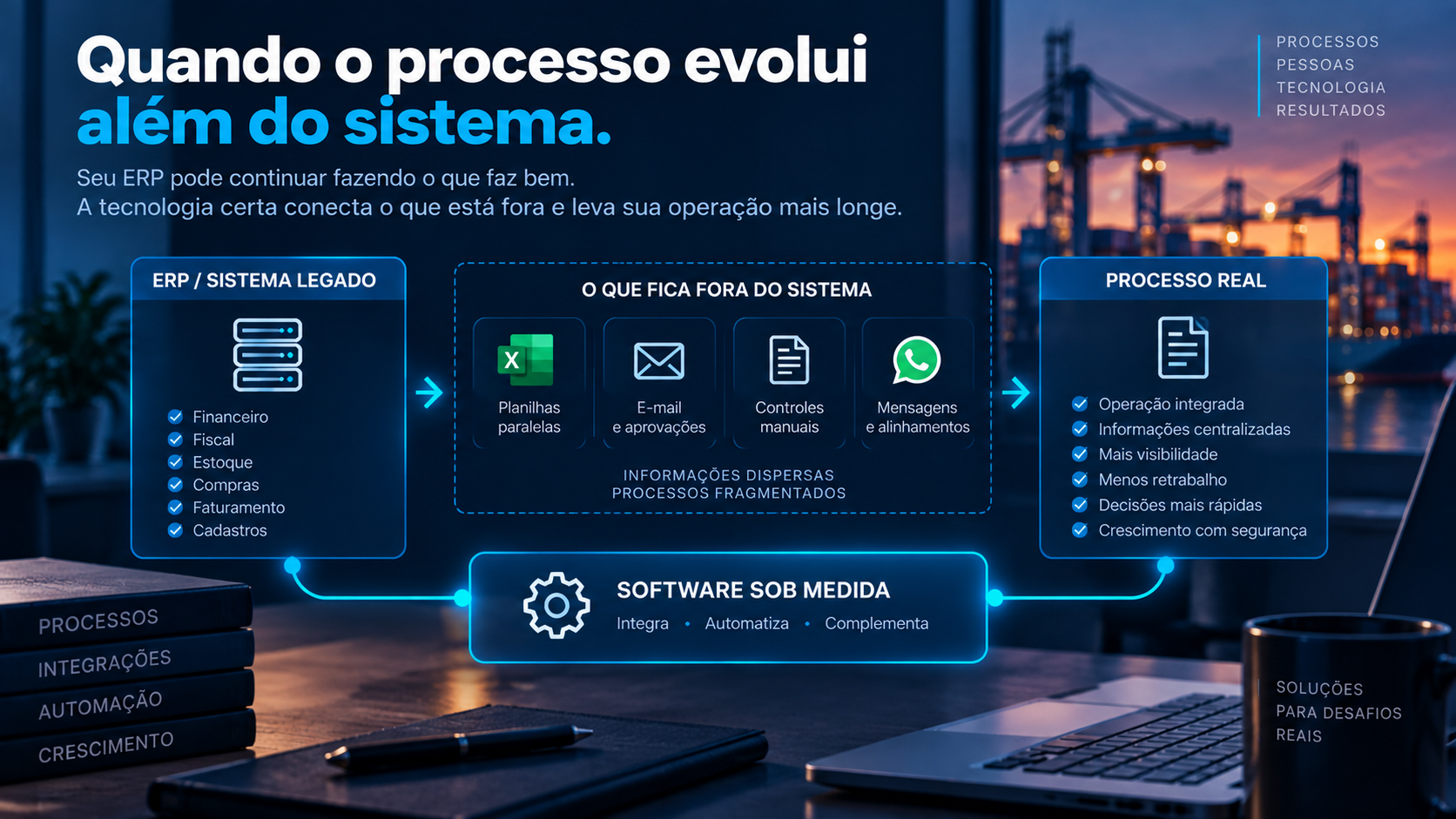
The problem is not the lack of tools
Most companies don’t lack tools.
They have too many — and they don’t align.
Tools that:
- don’t communicate with each other
- don’t reflect real processes
- force the operation to adapt
- create more work than they solve
When the tool becomes the problem
A tool should accelerate the operation.
But when poorly chosen or implemented, it starts to:
- create rework
- increase dependency
- make information harder to access
- slow down tasks
- delay decision-making
👉 the company starts working for the system
Signs your operation is being slowed down
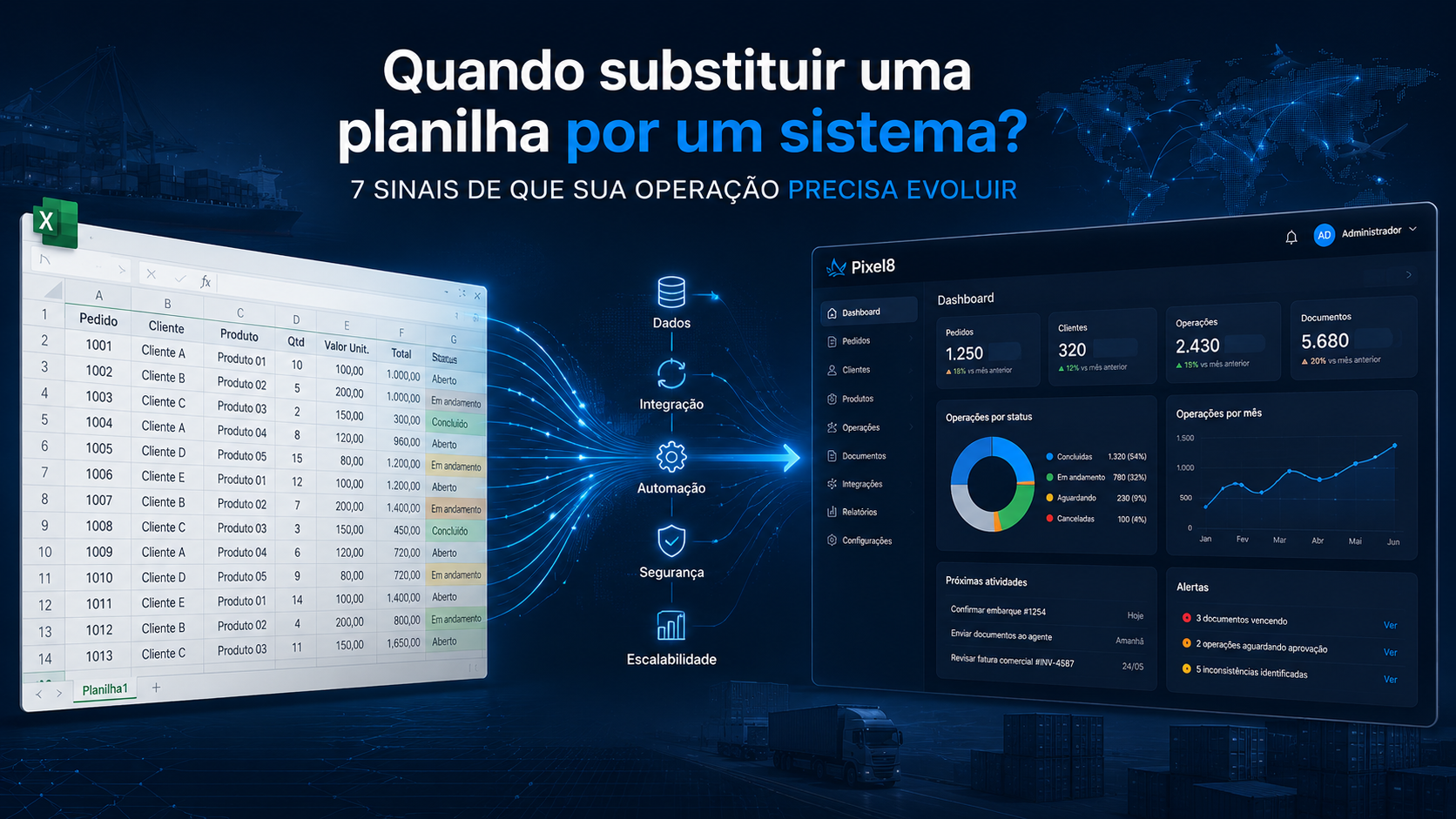
1. Scattered information
- part in CRM
- part in spreadsheets
- part in emails
- part in messaging apps
👉 no single source of truth
2. Processes shaped by the tool
Instead of the system following the process…
👉 the process is forced to fit the system
Result:
- inefficiency
- unnecessary steps
- execution friction
3. Too much time on simple tasks
- updating status
- searching for data
- consolidating information
👉 operational work consumes strategic time
4. Lack of integration
- duplicated data
- inconsistent information
- frequent errors
👉 more effort just to keep things running
5. Dependency on specific people
When only a few people understand the system:
👉 the operation becomes fragile
The real impact
Wrong tools don’t just slow things down.
They lead to:
- slower growth
- higher operational costs
- scaling difficulties
- missed opportunities
- poor decisions
And most importantly:
👉 the company struggles to evolve
The most common mistake
Believing that more tools will solve the problem.
In reality:
👉 more disconnected tools = more complexity
What actually works
Companies that scale successfully do the opposite:
- simplify operations
- centralize information
- structure processes first
- use systems aligned with the business
👉 the system serves the operation
👉 not the other way around
The role of the right technology
The right technology:
- reduces effort
- organizes workflows
- connects data
- speeds up decisions
- increases predictability
It doesn’t add complexity.
👉 it removes it
How Pixel8 helps
At Pixel8, we don’t think in isolated tools.
We think in systems.
That means:
- understanding your operation
- identifying bottlenecks
- structuring workflows
- building solutions aligned with your business
The goal is not to add another tool.
👉 it’s to make your operation work better
Conclusion
Companies don’t get stuck because they lack tools.
They get stuck because they use the wrong ones.
Or use them the wrong way.
In the end, what should accelerate growth…
👉 becomes a bottleneck
Want to structure your operation without relying on tools that slow you down?
Talk to our team and see how Pixel8 can help.