
The cost of adapting your business to the wrong software
Many companies believe that implementing software is a step forward.
In reality, the opposite often happens.
Instead of the system adapting to the operation, the company starts adapting to the system — and that’s where the problem begins.
This silent shift leads to productivity loss, misaligned processes, and ultimately limits growth.
The most common mistake: adapting operations to the system
Generic software is built to serve as many companies as possible.
That means it rarely reflects your specific operation.
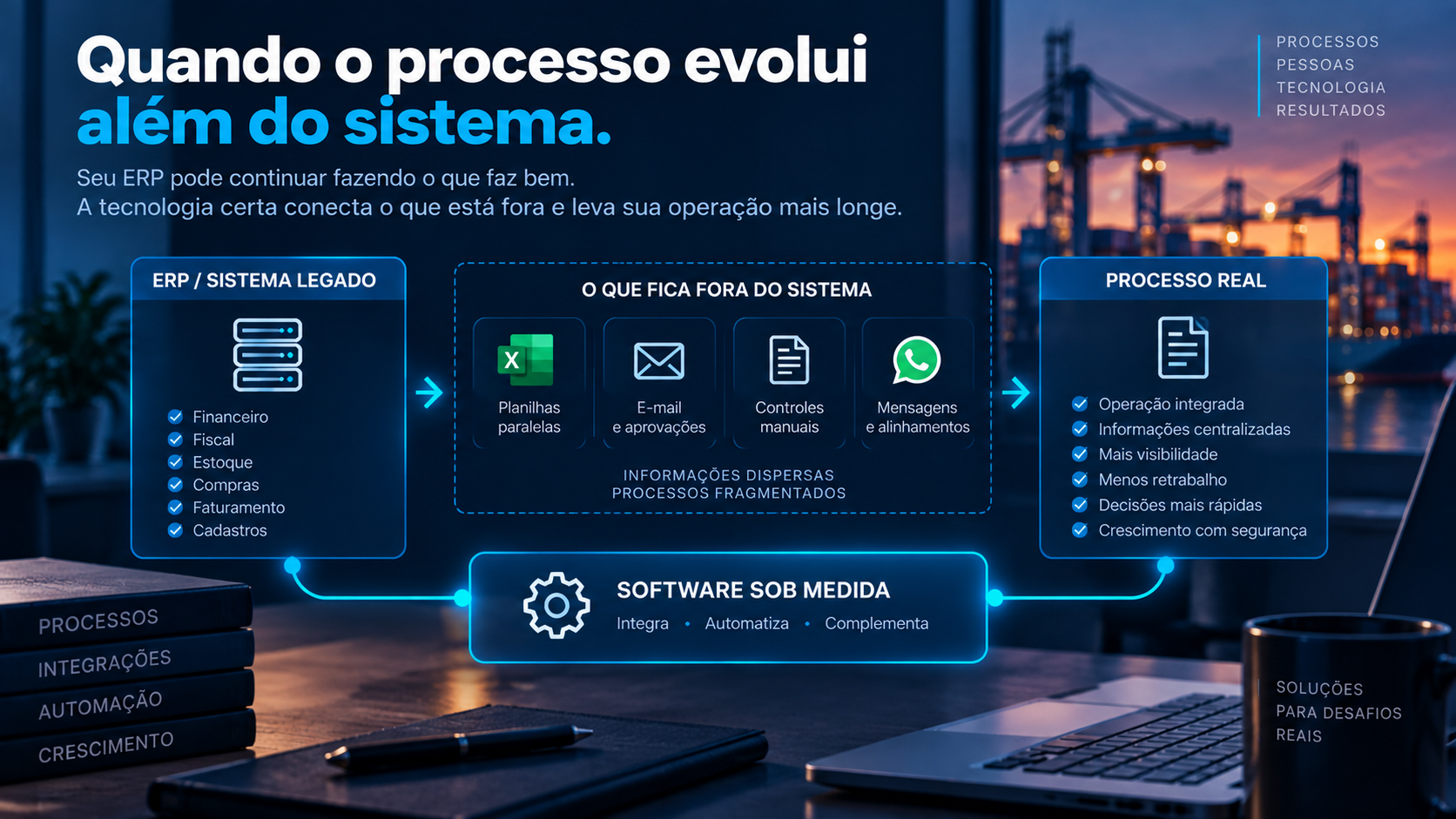
To “make it work”, companies end up:
- creating parallel processes
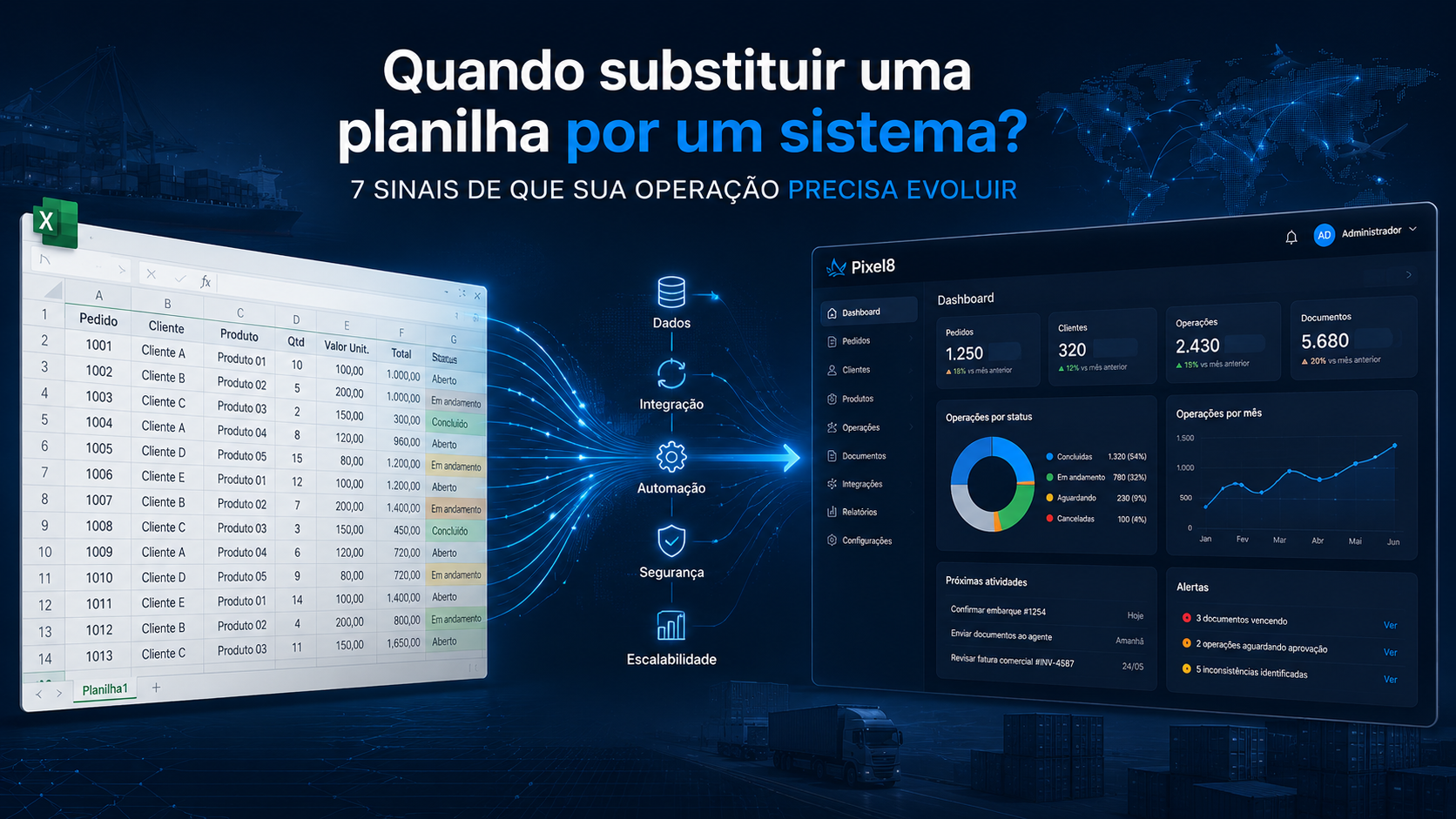
- using spreadsheets alongside the system
- adjusting internal workflows
- skipping important steps
- relying on manual workarounds
Over time, the operation becomes fragmented.
The hidden cost of this adaptation
The impact is not immediate — but it compounds over time:
1. Loss of productivity
Teams spend more time trying to fit work into the system than actually doing their job.
2. Constant rework
Data needs to be entered multiple times or manually corrected.
3. Lack of visibility
The system no longer reflects the real operation, making decision-making harder.
4. Dependency on people
Processes live in people’s heads instead of being structured in the system.
5. Limited scalability
When the company grows, the system becomes a bottleneck.
When software starts holding your business back
Clear signs you’re using the wrong system:
- your team avoids using it
- processes happen outside the system
- you rely on spreadsheets
- reports don’t match reality
- each department uses it differently
If this sounds familiar, the issue is not your team.
It’s your system.
What should happen instead
The system should:
- reflect your real operational flow
- centralize data
- automate repetitive tasks
- enforce process consistency
- provide real operational visibility
In other words, the system should follow the process — not the other way around.
The direct impact on results
Companies using misaligned systems:
- lose efficiency
- increase operational costs
- respond slower to the market
- struggle to scale
Companies with well-structured systems:
- move faster
- reduce errors
- gain control
- grow more predictably
How Pixel8 solves this
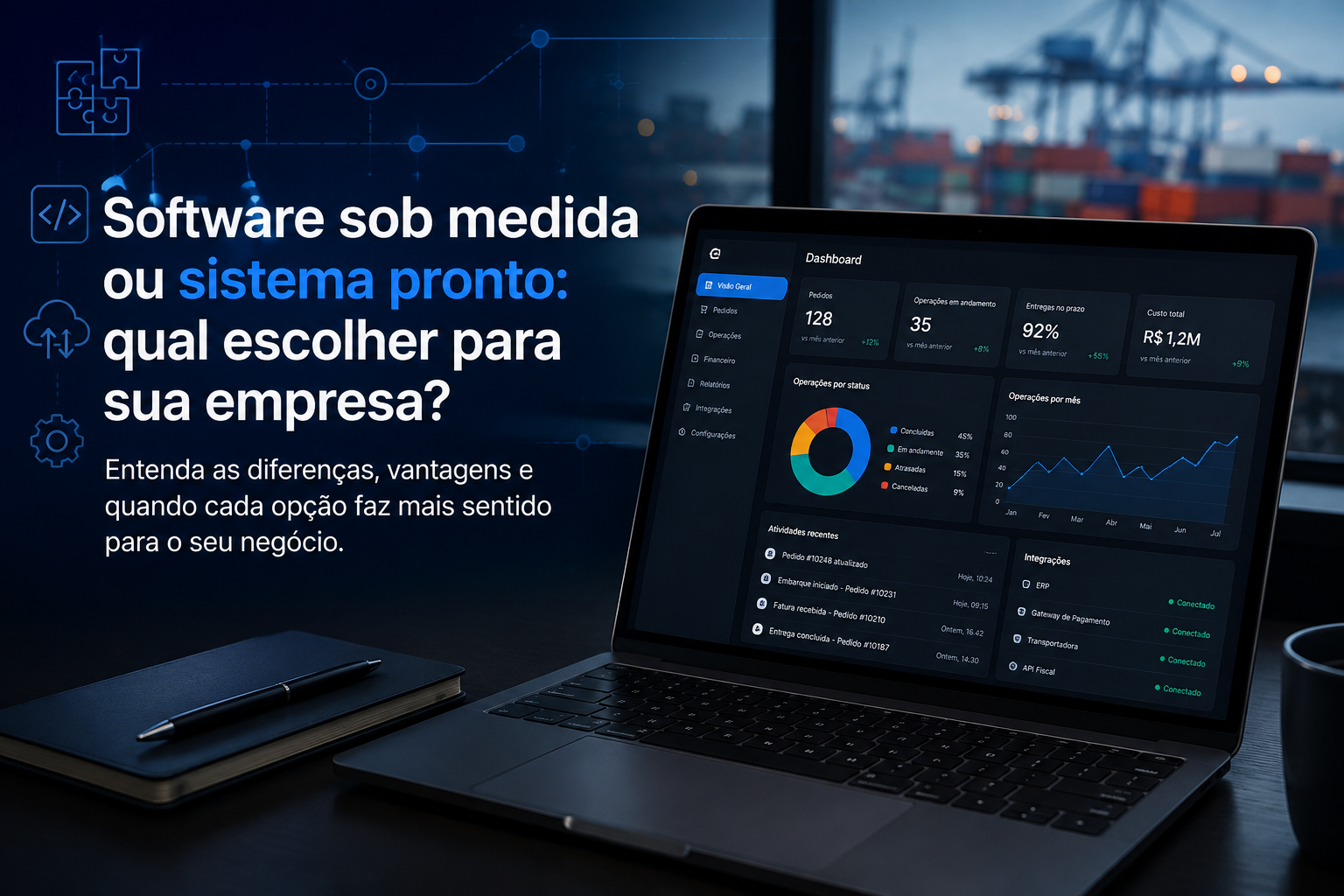
At Pixel8, we build systems tailored to your operation.
This means:
- workflows designed around your business
- integration across departments
- automation of critical processes
- full operational visibility
The goal is not just to digitize — but to structure.
Conclusion
Adapting your business to the wrong software comes with a high cost — even if it’s not immediately visible.
The problem is not using technology.
It’s using the wrong technology.
Companies that grow consistently understand that systems should work for the operation — not the other way around.
Want to structure your operation with the right system?
Talk to our team and see how Pixel8 can help.