Artificial Intelligence in Business: How to Apply AI to Real Processes
When companies think about artificial intelligence, one of the first applications that comes to mind is chat.
Ask a question.
Generate text.
Summarize a document.
Search for information.
These applications are useful, but they represent only one part of what artificial intelligence can do inside a business.
There is another opportunity: putting AI inside business processes.
Instead of waiting for someone to ask a question, AI can participate in tasks that happen every day.
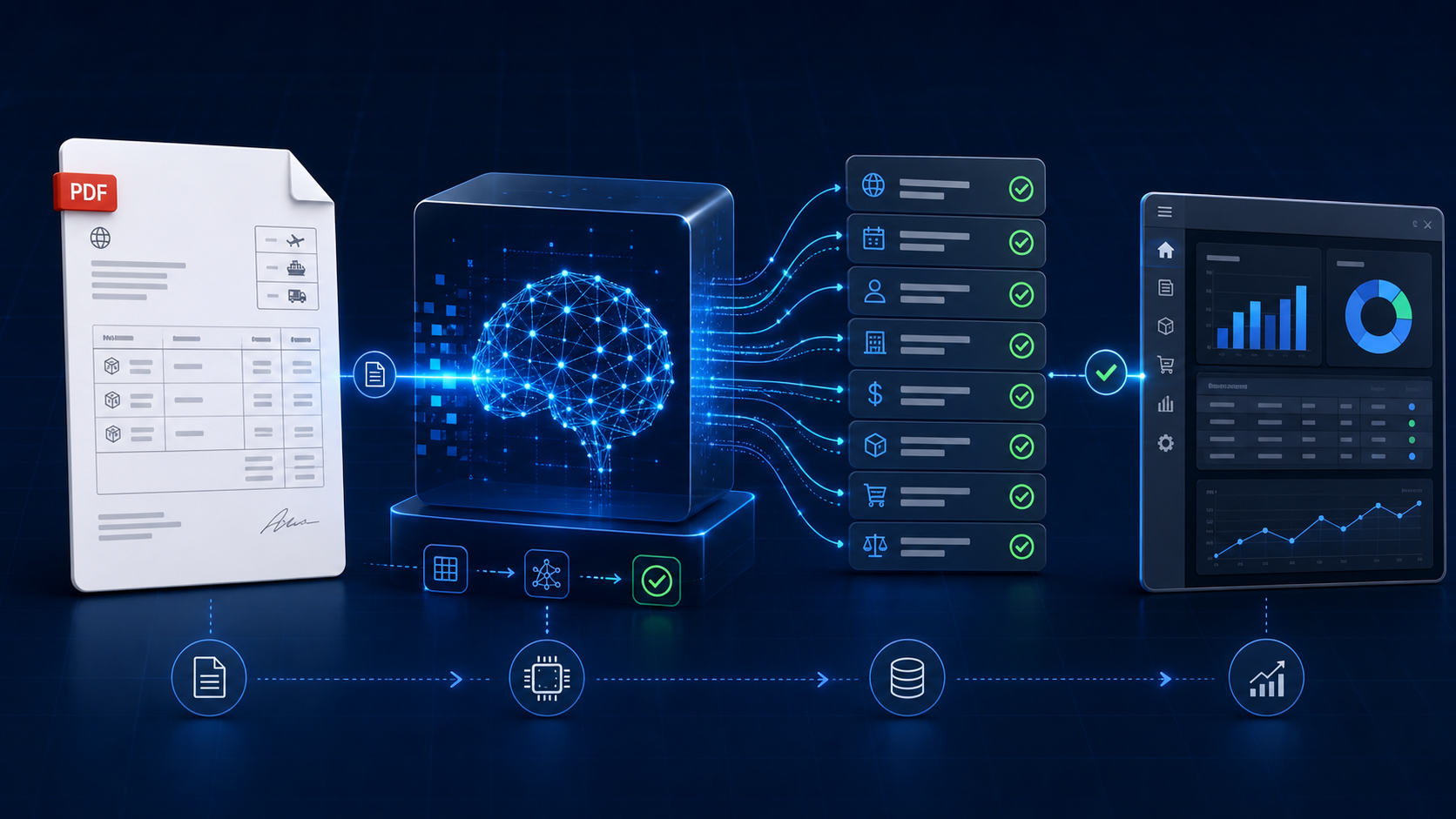
Read documents.
Extract information.
Classify data.
Compare content.
Search internal knowledge.
Identify unexpected situations.
Prepare analyses.
And route exceptions to people.
This is where artificial intelligence stops being just a tool used by employees and becomes part of the operational workflow.
AI in a chat and AI in a process are different things
Imagine an employee receiving a document by email.
They could download the file, open an AI tool, attach the document and ask:
“What is the total value of this invoice?”
The AI provides an answer.
That can already save some time.
But the rest of the process still depends on the employee.
They need to copy the answer, open another system, find the corresponding process, enter the value, perhaps verify another piece of information and decide what happens next.
Now imagine a different scenario.
The document arrives.
The system identifies the document type.
AI extracts the required information.
Business rules validate the data.
Approved information is sent to the appropriate system.
A discrepancy is identified.
Only that exception is routed for human review.
The workflow becomes:
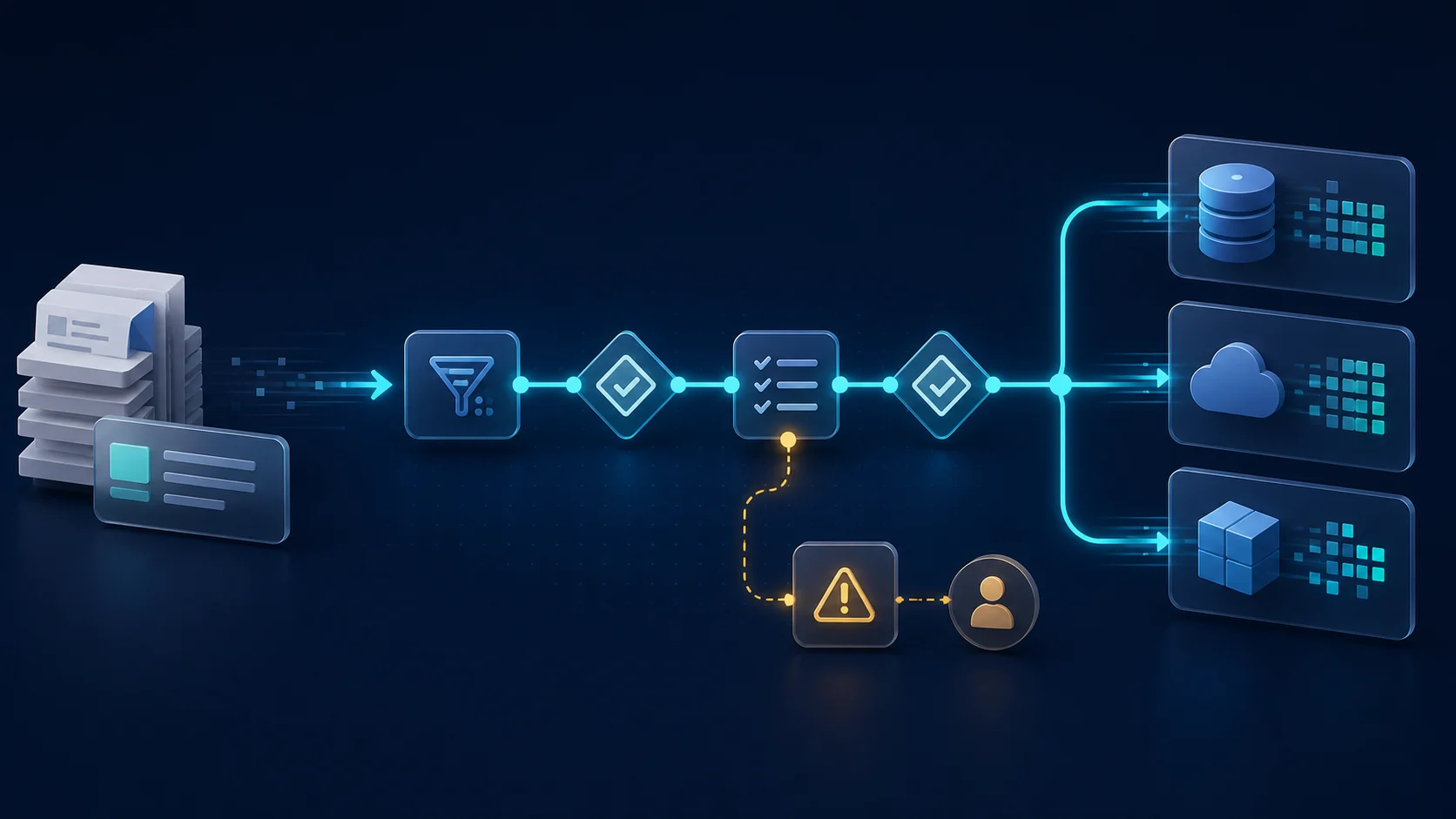
Document → AI → Data → Validation → System → Exception → Human
The AI model itself may even be similar.
What changes is the process architecture around it.
Where can artificial intelligence be applied in business?
There is no single answer.
The best applications depend on the information, volume, rules and decisions involved in each process.
However, several opportunities appear frequently.
1. Document reading and data extraction
Many business processes still begin with documents.
PDFs, forms, purchase orders, invoices, contracts, receipts, reports and logistics documents.
Important information is trapped inside these files and often needs to be manually entered into systems or spreadsheets.
AI can help transform unstructured content into structured data that other systems can use.
For example:
Document received → Identification → Extraction → Structured data → Validation → System
This reduces repetitive reading and manual data entry.
But there is an important distinction:
extracting information does not automatically mean the information is correct.
Extraction should therefore be only one step in the process.
2. Automatic information classification
Not all content simply needs to be extracted.
Sometimes it needs to be understood and classified.
An email could be a request, complaint, order, billing issue, incident or question.
A document may belong to a particular customer, process, category or operation.
A message may need to be routed to a specific team.
AI can assist with this classification and allow the next step to happen automatically.
Instead of someone receiving, interpreting and manually forwarding every item, the system can participate in that work.
3. Comparing information
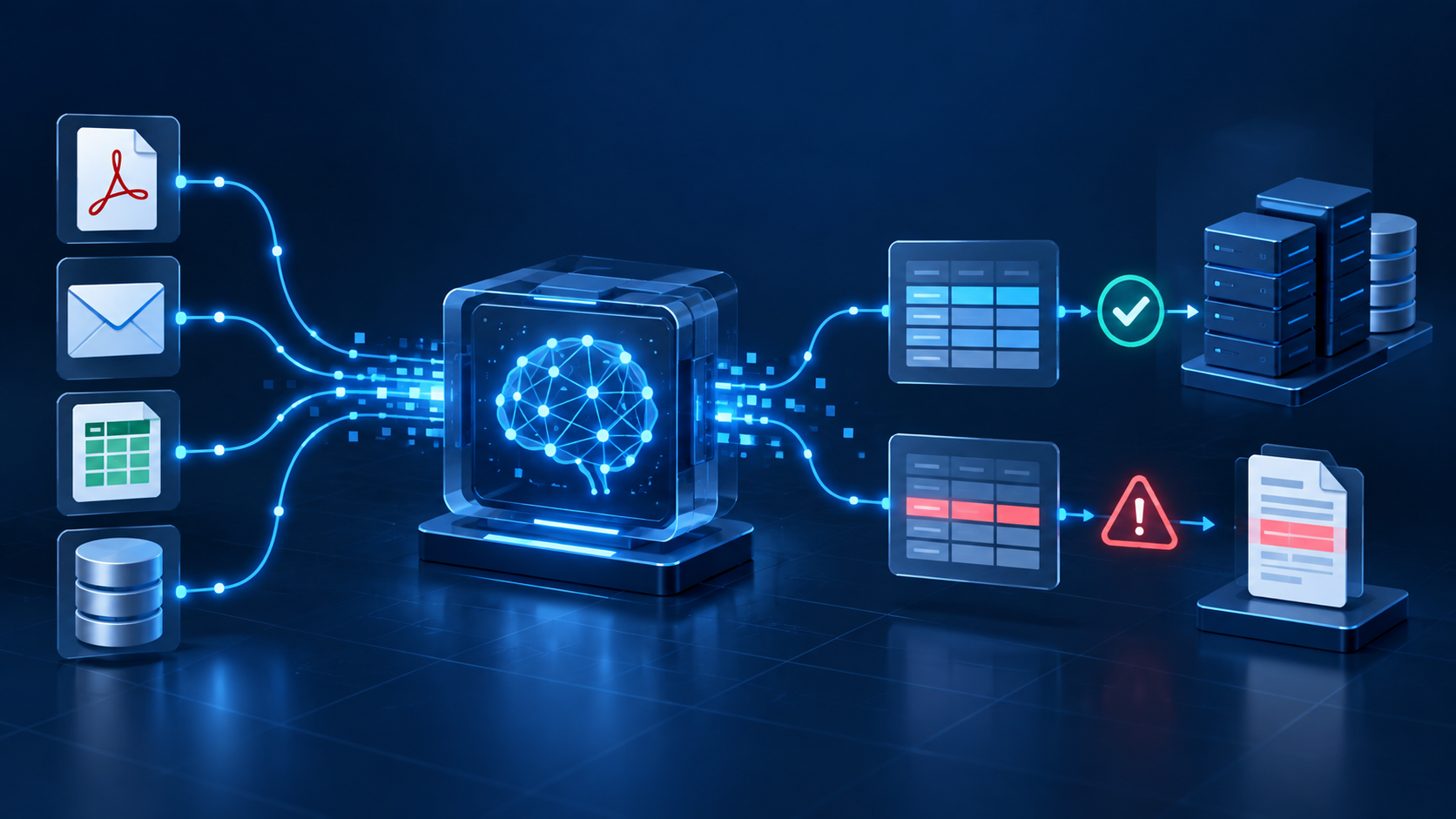
Another valuable application appears when a company needs to compare information from different sources.
Imagine three documents related to the same process.
One contains a quantity.
Another contains a weight.
A third contains a different reference.
AI can help locate and structure this information.
Rules and other techniques can then compare the values and identify differences.
The goal does not need to be allowing AI to decide which information is correct.
It can simply do something extremely useful:
show a person where there is a difference that deserves attention.
This changes the work from:
searching for differences
to:
reviewing identified differences.
4. Searching internal knowledge
Companies accumulate knowledge in many places.
Manuals.
Procedures.
Documents.
Internal policies.
FAQs.
Systems.
Databases.
Wikis.
Shared files.
The challenge is finding the right information when it is needed.
An AI application can enable natural-language queries and retrieve information related to the context of a question.
However, an enterprise solution needs to go beyond simply “asking a PDF.”
It must consider:
- permissions;
- sources;
- content freshness;
- traceability;
- context;
- answer reliability.
In many cases, knowing where an answer came from is just as important as the answer itself.
5. Identifying exceptions
Business processes usually have patterns.
An expected deadline.
A required set of documents.
Certain values.
A sequence of steps.
Rules that normally need to be followed.
A combination of AI, data and business rules can help identify situations that differ from expected behavior.
For example:
- missing information;
- conflicting data across documents;
- unexpected classifications;
- unusual deadlines;
- content requiring review;
- situations that cannot proceed automatically.
This approach is particularly valuable because it does not attempt to automate every decision.
It uses technology to find what deserves human attention.
6. Generating reports and analyses
Many companies already have enough data to answer important questions.
The challenge is transforming that data into useful information.
AI can help summarize events, organize information and prepare analyses based on available data.
An operational report, for example, can move beyond a sequence of numbers and highlight:
- what changed;
- what is outside expectations;
- what requires attention;
- which information supports the analysis.
The value is not only in automatically generating text.
It is in bringing data and decision-making closer together.
7. Decision support
This may be one of the most valuable applications — and one that requires greater care.
AI can gather context, search information, identify patterns and present relevant elements for a decision.
But supporting a decision is different from making a decision.
Business processes may combine:
AI + deterministic rules + data + human knowledge
Each component has a role.
AI can interpret.
A rule can validate.
A system can block an action.
And a person can decide how to handle an exception.
A good architecture clearly defines these boundaries.
AI does not need to automate everything
There is a common expectation that an automation project is successful only when human participation is completely eliminated.
That is not always true.
In many processes, it would not even be desirable.
Consider 1,000 pieces of information being analyzed.
If 950 comply with established rules and can proceed automatically, perhaps the team only needs to review the remaining 50.
The result is not:
“The person no longer participates.”
It is:
“The person no longer spends time on 950 situations that did not require human attention.”
This is the principle behind exception-based automation.
Technology processes the volume.
People apply their knowledge where there is uncertainty, risk or a decision to be made.
The problem with using AI when a simple rule would work
Not every problem requires artificial intelligence.
If a company needs to determine whether a date has expired, a traditional rule is probably sufficient.
If it needs to validate a structured identifier, deterministic methods may be more appropriate.
If it needs to calculate a value using a known formula, there is little reason to ask an AI model to generate the answer.
AI makes more sense when interpretation is required.
Text.
Documents.
Context.
Classification.
Language.
Unstructured content.
The best projects often combine different technologies:
AI where interpretation is required.
Rules where the answer must be deterministic.
Automation to execute the workflow.
Integration to move data between systems.
People to handle exceptions and decisions.
AI alone creates limited operational value
Imagine AI can read a document perfectly.
If the result simply appears on a screen and someone still has to copy the data into another system, part of the potential benefit has been lost.
This is why enterprise AI projects often require much more than an AI model.
APIs.
Integrations.
Databases.
Business rules.
Interfaces.
Permissions.
History.
Monitoring.
Error handling.
This infrastructure is what turns an AI capability into a business application.
What happens when AI makes a mistake?
This needs to be considered from the beginning of the project.
Artificial intelligence models should not be treated as infallible sources.
Depending on the application, it may be necessary to work with mechanisms such as:
- confidence;
- evidence;
- validation;
- business rules;
- human review;
- logs;
- decision history.
Imagine AI extracts a value from a document.
An enterprise solution should be able to answer, when necessary:
Which file was the source of this value?
Where did the information appear?
What exactly was extracted?
Did it pass any validation?
Did someone review or change the result?
The more critical the information, the more important this traceability becomes.
How to identify AI opportunities in your company
A good starting point is not:
“Where can we add AI?”
A better question is:
“Where does our team repeatedly spend time interpreting information?”
Look for activities where people need to:
- read large numbers of documents;
- classify content;
- search for information;
- compare sources;
- summarize large volumes of data;
- identify exceptions;
- search scattered knowledge;
- prepare repetitive analyses.
Then evaluate four factors:
Volume: How often does the activity occur?
Time: How much work does it consume?
Rules: Which parts have clear criteria?
Exceptions: When is human participation actually required?
This helps separate an interesting AI demonstration from an application capable of producing operational value.
An example from international trade
International trade is a good example because it combines documents, systems, data, rules and human decisions.
An operation may involve a Commercial Invoice, Packing List, Bill of Lading, Air Waybill, certificates, licenses and other documents.
Imagine using AI to extract information from these files.
Quantity.
Weight.
Values.
Dates.
Incoterms.
References.
Extraction alone can already reduce manual data entry.
But the workflow can continue:
Documents → Extraction → Comparison → Validation → Discrepancies → Review
Technology processes the information.
Rules verify what can be validated objectively.
Discrepancies are presented with context.
The team analyzes what truly requires operational knowledge.
This is an example of AI applied to a process, rather than AI being used as a separate tool.
How to start an AI process automation project
Before choosing models or technologies, map a specific process.
Understand how information enters the workflow.
Identify what people do with it.
Separate repetitive tasks from decisions.
Document known business rules.
Identify exceptions.
Determine which systems need to receive the information.
And define how results can be validated.
Once this is clear, it becomes much easier to understand where AI can actually create value.
The project stops starting with technology.
It starts with the problem.
AI applied to the process. Not just to the chat.
Artificial intelligence has opened important possibilities for businesses.
But the greatest value will not always come from adding another screen where someone can talk to an AI model.
In many cases, the value will be less visible:
AI working inside the process.
Receiving information.
Interpreting content.
Structuring data.
Identifying exceptions.
Searching knowledge.
Supporting decisions.
And triggering systems.
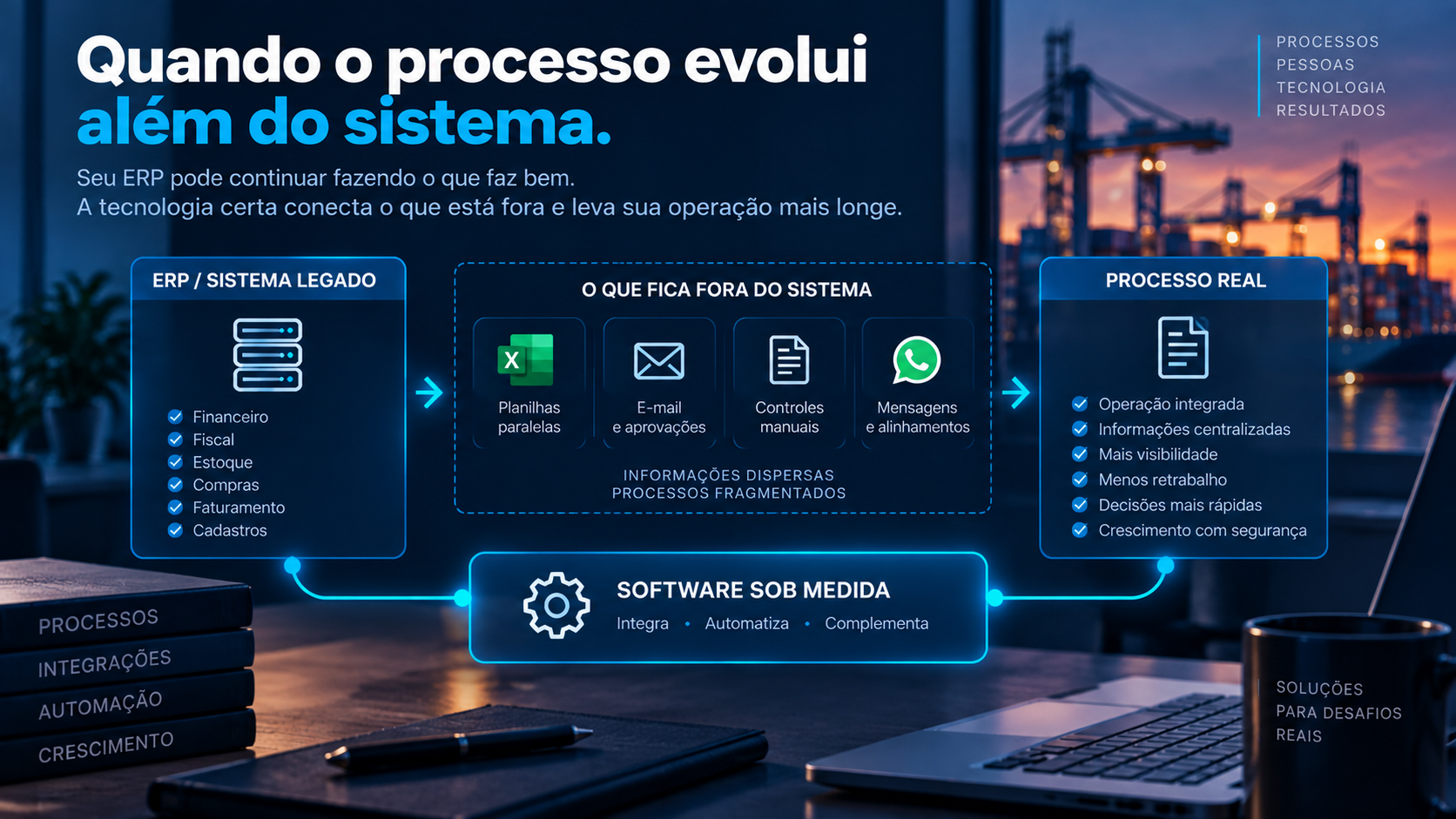
When combined with software development, integrations, automation and business rules, AI stops being an isolated tool and becomes part of the operation.
At Pixel8, we work precisely at this intersection:
Software Development + Integration + Automation + AI.
The goal is not to put artificial intelligence everywhere.
It is to discover where AI can actually work for your business.
Does your company have a process that depends on manually reading, checking, classifying or analyzing information?
Talk to Pixel8.