What is ETA in International Trade
In international trade, few pieces of information are as important as ETA.
Companies involved in importing and exporting rely on ETA daily to organize:
- receiving operations
- warehousing
- production planning
- transportation
- customs clearance
- operational scheduling
Yet many operations still lack real visibility into shipment ETA updates.
And that creates delays, costs, and operational chaos.
What does ETA mean
ETA stands for:
Estimated Time of Arrival
In global trade, ETA indicates when a shipment, vessel, flight, or container is expected to arrive at its destination.
Where ETA is used
ETA is used across multiple stages of international logistics:
- ocean freight
- air freight
- container tracking
- ports
- airports
- trucking operations
- logistics systems
Why ETA is so important
ETA directly impacts the entire operation.
Many business decisions depend on this information.
For example:
- unloading schedules
- warehouse reservations
- production planning
- transportation hiring
- customs and documentation preparation
- customs clearance operations
When ETA changes and the company does not notice quickly, operational impacts can be significant.
ETA is not a guaranteed arrival time
This is an important point.
ETA is an estimate.
Which means:
👉 it can change throughout the operation
Especially in situations involving:
- port congestion
- weather delays
- transshipment
- operational retention
- carrier delays
- route changes
- customs inspections
That is why real-time ETA monitoring is essential.
The problem of limited visibility
Many companies still depend on:
- emails
- spreadsheets
- manual updates
- freight forwarder feedback
- fragmented information
As a result, operations often discover delays too late.
And in international trade, reacting late is expensive.
The impact of outdated ETA information
When arrival forecasts change and the operation does not follow those updates, problems can arise such as:
- additional storage costs
- demurrage
- production delays
- stock shortages
- operational rework
- emergency costs
- delayed customer deliveries
Modern shipment tracking goes beyond ETA
Today, more structured companies use platforms that provide:
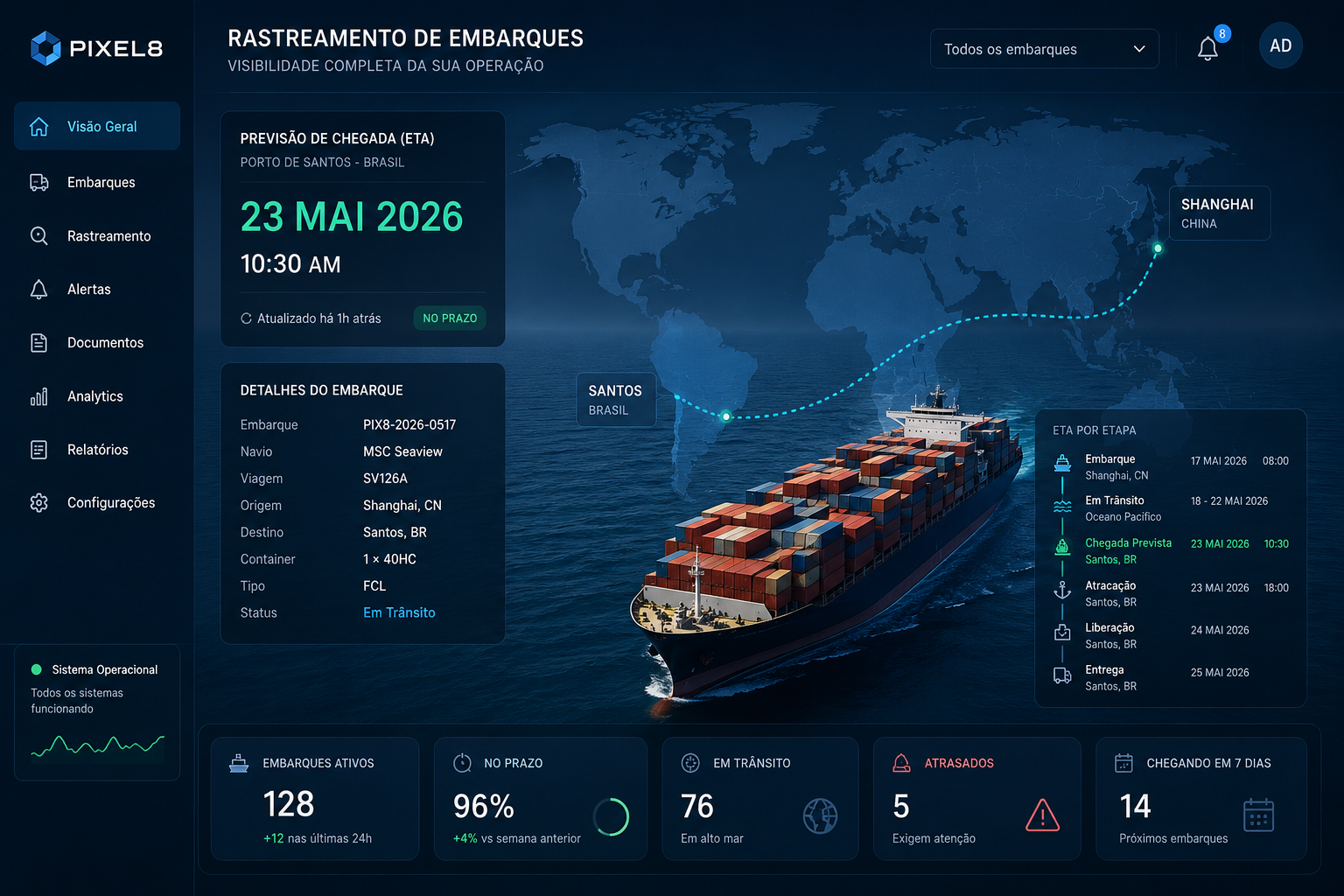
- real-time ocean tracking
- automatic ETA updates
- operational alerts
- container-level visibility
- shipment monitoring
- operational history
This reduces manual dependency and improves predictability.
How Pixel8 sees this
At Pixel8, we believe operational visibility is a strategic necessity.
That is why we develop systems that help companies:
- track shipments in real time
- monitor ETA changes
- centralize logistics information
- reduce delays and operational rework
The goal is to transform logistics information into operational decision-making capability.
Conclusion
ETA is much more than a simple arrival forecast.
In international trade, it directly impacts:
- costs
- planning
- operations
- productivity
- margins
And companies without updated shipment visibility often operate blindly.
Want more visibility over your international shipments?
Talk to our team and see how Pixel8 can help.