
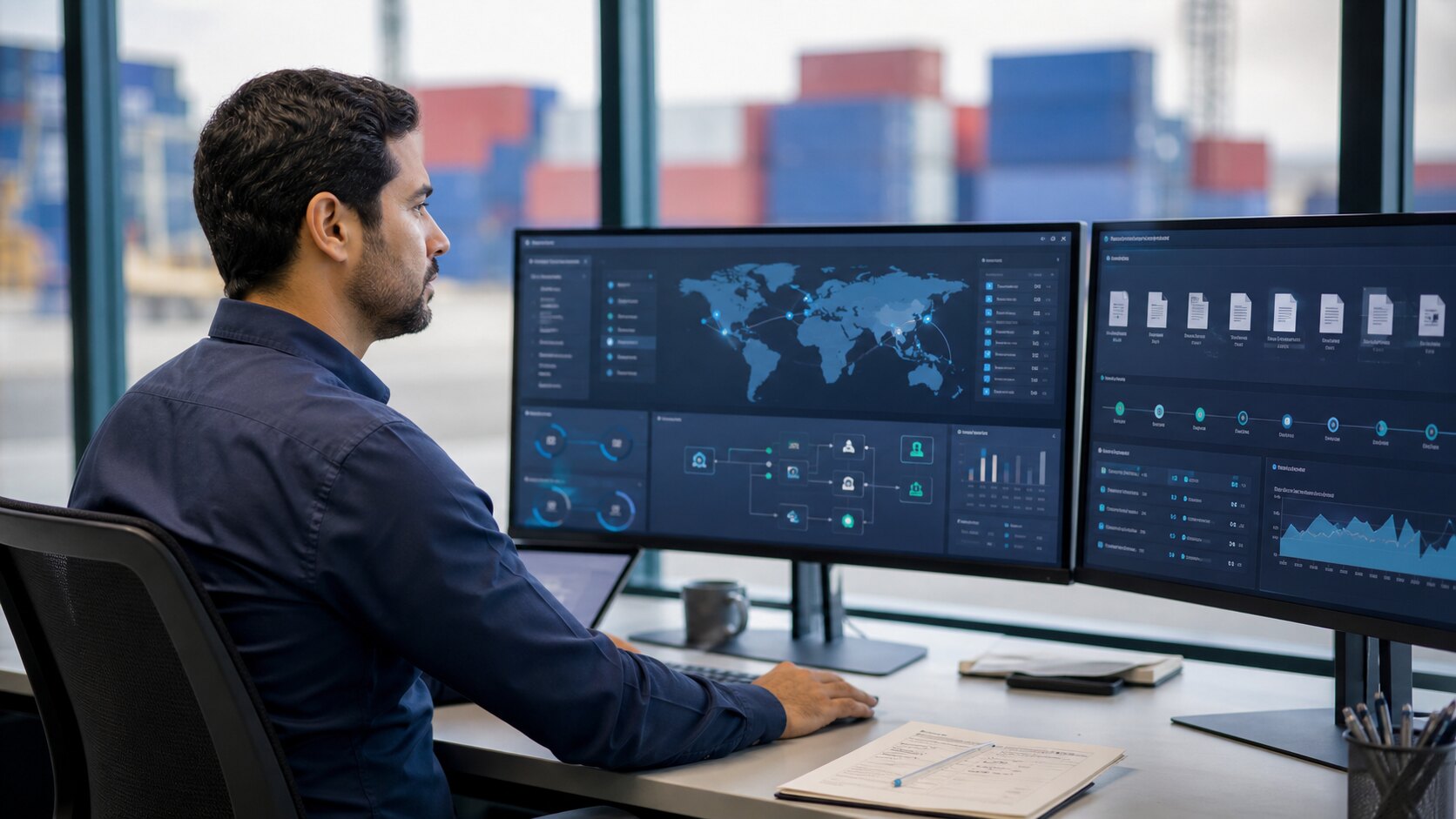
How to Automate Import Processes
Import operations involve dozens of repetitive tasks performed every day.
Updating spreadsheets, tracking shipments, organizing documents, managing deadlines, exchanging emails, and responding to customers are all part of the daily routine in international trade.
While these activities are essential, many of them can be automated, allowing teams to focus on higher-value work.
This article explains how import process automation improves operational efficiency and reduces costly mistakes.
Why Automate Import Operations?
As shipment volume grows, manual management becomes increasingly difficult.
Common consequences include:
- repetitive work
- manual errors
- misplaced documents
- shipment delays
- poor visibility
- slow information retrieval
Automation helps eliminate these issues while improving overall productivity.
Which Processes Can Be Automated?
Many routine operational activities can be automated.
Shipment Tracking
Instead of manually checking carrier websites, software can automatically update shipment information.
Companies can monitor:
- ETA
- ETD
- vessel schedules
- route changes
- port arrivals
- final delivery
Document Management
Import documents can be stored and organized automatically.
Typical documents include:
- Commercial Invoice
- Packing List
- Bill of Lading
- certificates
- import licenses
- customs documentation
Centralized document management minimizes operational risks.
Deadline Monitoring
Automated alerts help teams stay ahead of important events, including:
- document expiration
- shipment arrivals
- payment deadlines
- customs clearance
- pending operational tasks
This significantly reduces delays.
Workflow Automation
Operational workflows can also be standardized.
When one task is completed, the next activity can be generated automatically, ensuring process consistency.
Benefits of Automation
Companies that automate import operations typically achieve:
- less repetitive work
- higher productivity
- fewer operational errors
- better collaboration
- improved visibility
- faster decision-making
Automation supports people rather than replacing them, allowing teams to focus on analysis and strategic planning.
The Role of Technology
Automation requires more than software.
Successful automation depends on standardized processes and centralized operational information.
When shipment data, documents, deadlines, and KPIs are scattered across multiple systems, automation becomes far less effective.
Integrated information creates a stronger operational foundation.
How Pixel8 Helps
ComexOS automates key activities throughout the import process.
Companies can:
- monitor import operations
- organize digital documents
- manage deadlines
- track shipments
- monitor operational KPIs
- centralize operational information
The result is a more efficient, predictable, and scalable import operation.
Conclusion
Automating import processes is one of the most effective ways to reduce operational costs, eliminate manual work, and improve visibility.
Companies that continue relying on spreadsheets and disconnected workflows often struggle with delays, errors, and limited operational control.
By automating repetitive tasks, businesses create faster, more reliable, and more scalable international trade operations.
Looking to automate your import operations? Discover how Pixel8 helps companies streamline international trade with intelligent operational management.